

01: Mindset

What is mindset?
A buzzword? Probably. Growth mindset, open mindset, learning mindset – we’ve all heard it before, and you’re probably like ‘blah blah blah yeah we get it’.
But we’ve greatly underestimated the value of understanding someone’s mindset. Particularly when it comes to behaviour and wanting to implement change.
The definition
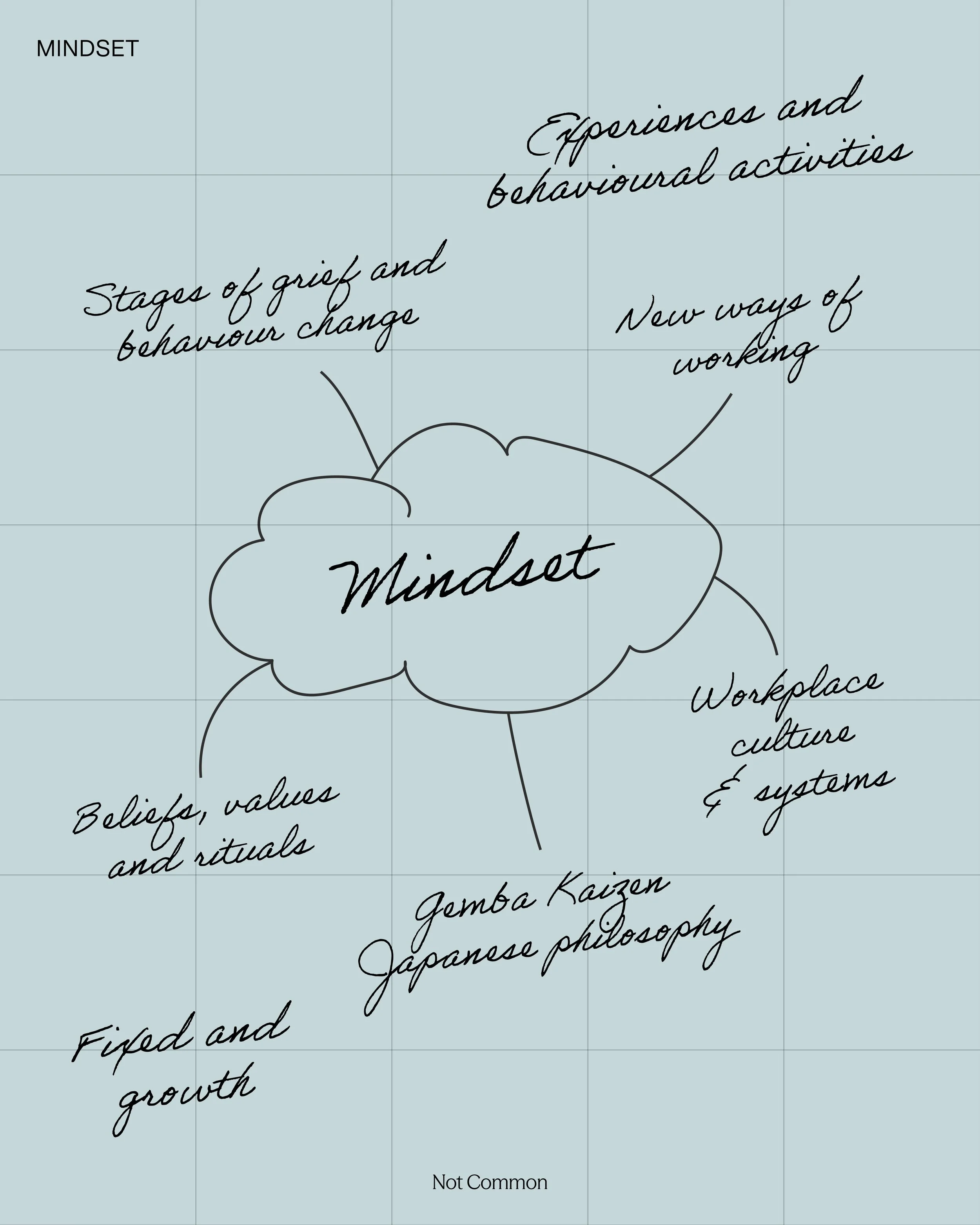
Mindset is the established set of attitudes, beliefs, and assumptions a person holds about themselves, others, and the world – which shapes how they interpret experiences and respond to challenges. It’s essentially the mental lens through which you see and engage with reality.
Mindset has the ability to be either a single person’s orientation or the shared assumptions of a team, organisation, or culture.
There are two types of mindsets: fixed and growth. A fixed mindset treats abilities as innate and unchangeable; a growth mindset sees them as developable through effort and learning.
Tali Sharot’s The Influential Mind (2017) speaks to mindset adaptation through emotion, experience, and self-discovery
Tali Sharot’s central idea from The Influential Mind (2017) is that the human brain is not a passive receiver of information, it is actually an active filter.
When new information arrives, the brain processes it through the lens of existing beliefs, emotions, and prior experiences.
So presenting facts alone is rarely sufficient to change minds, and in many cases, counterproductive. Directly challenging existing beliefs triggers defensiveness and entrenches people further. The more effective process to shift someones mindset is making them witnesses positive evidence so they arrive at new conclusions themselves.


To successfully go through a personal transformation experience (where one changes their beliefs and behaviour) often mirrors the Kubler-Ross stages of grief. This is because, for a true transformation to occur, a persons “old way of thinking” must “die” to make room for a new reality (Womack, 2025).

M.
Design more of the good stuff.